Polonnaruwa

Polonnaruwa

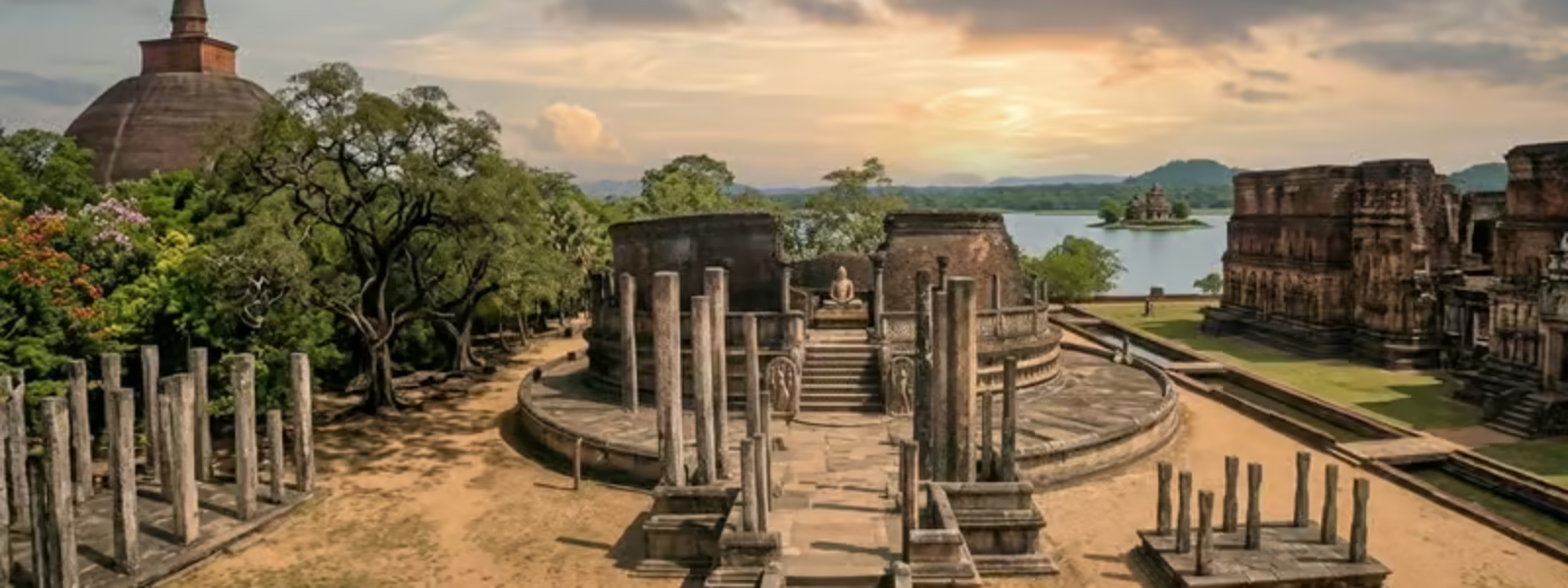
If the ancient city of Anuradhapura gave Sri Lanka its roots, Polonnaruwa gave it its golden age — and exploring this magnificent medieval capital is one of the most thrilling and rewarding historical adventures the island has to offer. Sri Lanka's second great ancient capital and a UNESCO World Heritage Site, Polonnaruwa flourished between the 11th and 13th centuries as a city of extraordinary architectural ambition, artistic brilliance, and civilisational sophistication. The ruins that survive today are remarkably well preserved and spread across a fascinating and very walkable landscape that rewards every curious visitor with discovery after discovery of ancient wonder. The absolute highlight is the sacred Gal Vihara — four colossal and supremely beautiful Buddha figures carved directly into a single granite face with a skill and artistry that will leave you genuinely speechless. Royal palaces, ancient temples, enormous stupas, and the remarkable Parakrama Samudra — a vast reservoir built by King Parakramabahu that still irrigates the surrounding farmland today — all combine to make Polonnaruwa one of the most extraordinary and memorable destinations in all of Sri Lanka.

1 tour in Polonnaruwa

Filter

Price range

Min. price$0.00
Max. price$50.00

Types

Activities

Durations

Time of Day

Languages

1 tour foundClear filter

Login to use

Sri Lanka Highlights Journey
4.8(2)

Sri Lanka Highlights Journey

Duration

08 Days

Group size

0 - 15
Showing 1-1 of 1 tours

Find & Book flights

Book your flights with Togo Airways

FAQ’s about Polonnaruwa

Have more questions? Contact us.

Where is Polonnaruwa located and how do I get there?
Polonnaruwa is located in the North Central Province of Sri Lanka, approximately 215 km from Colombo and 100 km from Kandy, sitting at the heart of Sri Lanka's famous Cultural Triangle. By private car or hired vehicle from Colombo the journey takes approximately 4 to 5 hours via the A6 highway passing through Dambulla. From the popular Cultural Triangle base of Habarana, Polonnaruwa is just 40 km away and easily reached in under an hour making it an ideal and very popular day trip from that area. Regular intercity buses and trains also operate between Colombo and Polonnaruwa for budget conscious travellers. Many visitors choose to combine Polonnaruwa with visits to Sigiriya, Dambulla, and Anuradhapura as part of a comprehensive Cultural Triangle itinerary staying in Habarana or Sigiriya as a central base.
What is the historical significance of Polonnaruwa?
Polonnaruwa holds a position of extraordinary importance in the history of Sri Lanka as the island's second great ancient capital and one of the most significant medieval cities in all of South Asia. Following the decline of Anuradhapura in the 10th century, Polonnaruwa emerged as the new centre of Sinhalese power and civilisation and reached the very peak of its glory under the brilliant and visionary King Parakramabahu I who ruled from 1153 to 1186 AD. During his remarkable reign the city was transformed into one of the most sophisticated, prosperous, and beautifully planned urban centres of the medieval world — renowned across the ancient world for its magnificent palaces, sacred temples, elaborate irrigation systems, and the extraordinary artistic achievements of its craftsmen and architects. The city served as the capital of Sri Lanka for approximately two centuries before falling into decline in the 13th century following successive South Indian invasions and was eventually abandoned to the jungle — where it lay hidden for centuries before being rediscovered and systematically excavated in the 19th and 20th centuries.
What are the must see attractions at Polonnaruwa?
Polonnaruwa is home to an extraordinary collection of remarkably well preserved ancient monuments and archaeological treasures that make every visit a deeply rewarding and awe inspiring experience. The absolute highlight and the single greatest work of art in all of Sri Lanka is the sacred Gal Vihara — four magnificent Buddha figures of breathtaking scale and beauty carved directly into the face of a single granite outcrop with a mastery of stone sculpture that has never been surpassed on the island. The Royal Palace complex of King Parakramabahu — once a magnificent seven storey structure — is another unmissable highlight alongside the elaborately decorated Rankoth Vehera stupa, the beautifully preserved Lankatilaka image house, the fascinating Vatadage circular relic house, and the ancient Shiva Devale Hindu temples that reflect the cosmopolitan and culturally diverse character of the medieval city. The vast Parakrama Samudra reservoir stretching magnificently across the western edge of the ancient city is an engineering achievement of truly extraordinary scale that remains in active use after nearly a thousand years.
What is the Gal Vihara and why is it considered so special?
The Gal Vihara is without question the greatest and most celebrated artistic treasure of Polonnaruwa and one of the most magnificent works of ancient art anywhere in Asia. Carved directly into the face of a single massive granite outcrop during the reign of King Parakramabahu I in the 12th century, the Gal Vihara consists of four extraordinary Buddha figures of different sizes and postures that demonstrate a level of sculptural mastery, artistic sensitivity, and technical achievement that is genuinely breathtaking to encounter in person. The most dramatic figure is the magnificent 15 metre reclining Buddha — carved from a single block of granite with a serene expression of such extraordinary beauty and refinement that it is widely regarded as the finest example of ancient Buddhist sculpture in the entire world. The standing Buddha at 7 metres tall and the two seated figures in the hollowed out rock shrine complete an ensemble of artistic greatness that has moved and astonished every visitor who has stood before it for nearly a thousand years. Standing in the presence of the Gal Vihara is one of the most genuinely moving and humbling cultural experiences Sri Lanka has to offer.
What is the best time to visit Polonnaruwa?
The best time to visit Polonnaruwa is from May to September and again from December to April when the North Central Province enjoys its dry season with warm sunny weather and minimal rainfall ideal for outdoor exploration of the extensive ancient ruins. Early morning visits are very strongly recommended for several compelling reasons — the temperature is significantly cooler and more comfortable for walking between the widely spaced monuments, the golden morning light creates the most beautiful and atmospheric conditions for experiencing and photographing the ancient ruins, and the site is considerably less crowded giving you a more peaceful and personal encounter with these extraordinary ancient places. Arriving at the site when it opens at 7am and spending the first two to three hours exploring before the midday heat sets in will make an enormous difference to the quality and enjoyment of your Polonnaruwa experience.
How much time do I need to explore Polonnaruwa and is a guide recommended?
Polonnaruwa is a large and extensively spread out ancient site and doing it full justice requires a minimum of half a day — ideally a full day for visitors with a serious interest in history, archaeology, and ancient art. The ruins are spread across a considerable area and the most popular and convenient way to explore them is by bicycle — bikes are readily available for hire at very affordable rates from vendors near the site entrance and allow visitors to move freely and efficiently between the widely spaced monuments at their own pace. Hiring a knowledgeable and licensed local guide at the site entrance is very highly recommended as the depth of historical context, fascinating stories, and detailed architectural insights they provide transform what might otherwise be a pleasant but somewhat puzzling walk among ancient ruins into a genuinely profound and deeply memorable encounter with one of the greatest civilisations of the ancient world. A guided visit to Polonnaruwa is an investment that every visitor will be glad they made.